
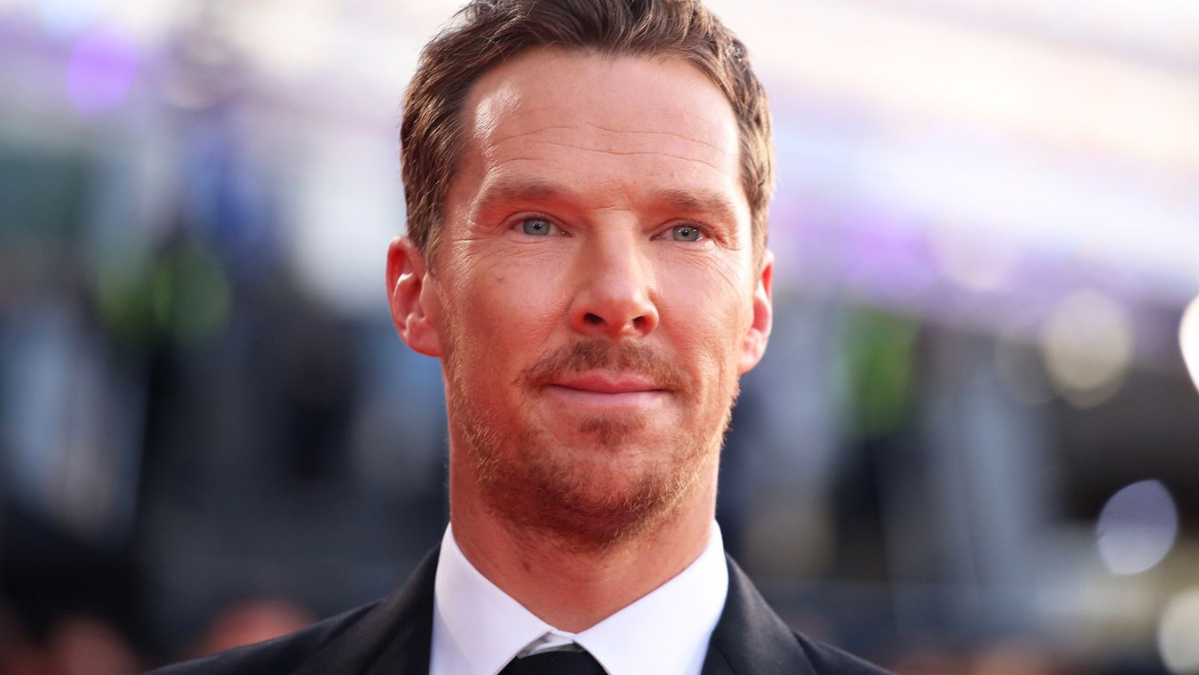
When you utter the name Benedict Cumberbatch, it conjures an immediate image: sharp cheekbones, piercing blue eyes, and a voice that seems to have been carved out of polished mahogany. But to reduce the actor to his physical attributes would be to miss the point entirely. In the pantheon of twenty-first-century actors, Benedict Cumberbatch stands as a singular architect of character, a performer who has meticulously rebuilt the archetype of the leading man. He didn’t arrive in Hollywood with the conventional charm of a matinee idol; he infiltrated it with the intellectual intensity of a scholar and the unpredictable physicality of a character actor trapped in a protagonist’s body. His journey from the stages of London to the highest-grossing films in the world is a masterclass in how to maintain artistic integrity while conquering the commercial landscape.
What makes the trajectory of Benedict Cumberbatch so fascinating to dissect is the deliberate nature of his choices. In an era where franchises often dictate an actor’s path, Cumberbatch has managed to bend those franchises to his will rather than the other way around. Whether he is playing a misanthropic genius in a deerstalker, a grieving father in a Western, or a purple-skinned titan in a motion-capture suit, he brings a specific, undeniable weight to the screen. He possesses a rare ability to intellectualize a role without ever sacrificing its emotional core. For critics and audiences alike, he has become the standard bearer for a type of acting that is both cerebrally rigorous and viscerally exciting, proving that intelligence on screen is not just permissible—it is magnetic.
The Meteoric Rise of Benedict Cumberbatch Through Sherlock
For a significant portion of the global audience, the first introduction to Benedict Cumberbatch came not through a Hollywood blockbuster, but through a BBC series set in modern-day London. Sherlock, co-created by Steven Moffat and Mark Gatiss, was a cultural phenomenon, and at its heart was Cumberbatch’s portrayal of the world’s most famous detective. This was not the polite, deerstalker-clad figure of past adaptations; this was a Sherlock Holmes who was a “high-functioning sociopath,” a man whose intellect was so vast it became a weapon and a shield. Cumberbatch played him with a frantic, electric energy. His dialogue delivery was a machine-gun fire of deductions, so fast that it forced viewers to lean in, to pay attention. He made arrogance not just palatable, but strangely aspirational. The role demanded a unique blend of physical stillness and mental chaos, a combination that Cumberbatch mastered with unnerving precision.
The impact of Sherlock on the career of Benedict Cumberbatch cannot be overstated, yet it also created a fascinating paradox. For years, he was so indelibly linked to the character that many wondered if he would be typecast as the cold, calculating genius. However, Cumberbatch used the platform to demonstrate the opposite. While Sherlock catapulted him into the ranks of the A-list, he strategically leveraged that fame to take risks. He showed a chameleon-like ability to subvert the very persona that made him famous. In the seasons that followed, he layered Holmes with vulnerability, addiction, and a profound, often heartbreaking, capacity for friendship—particularly in his chemistry with Martin Freeman’s Watson. This performance taught the industry a crucial lesson: while Cumberbatch could play the smartest man in the room, he was far more interested in exposing the tragic isolation that such intelligence often entails.
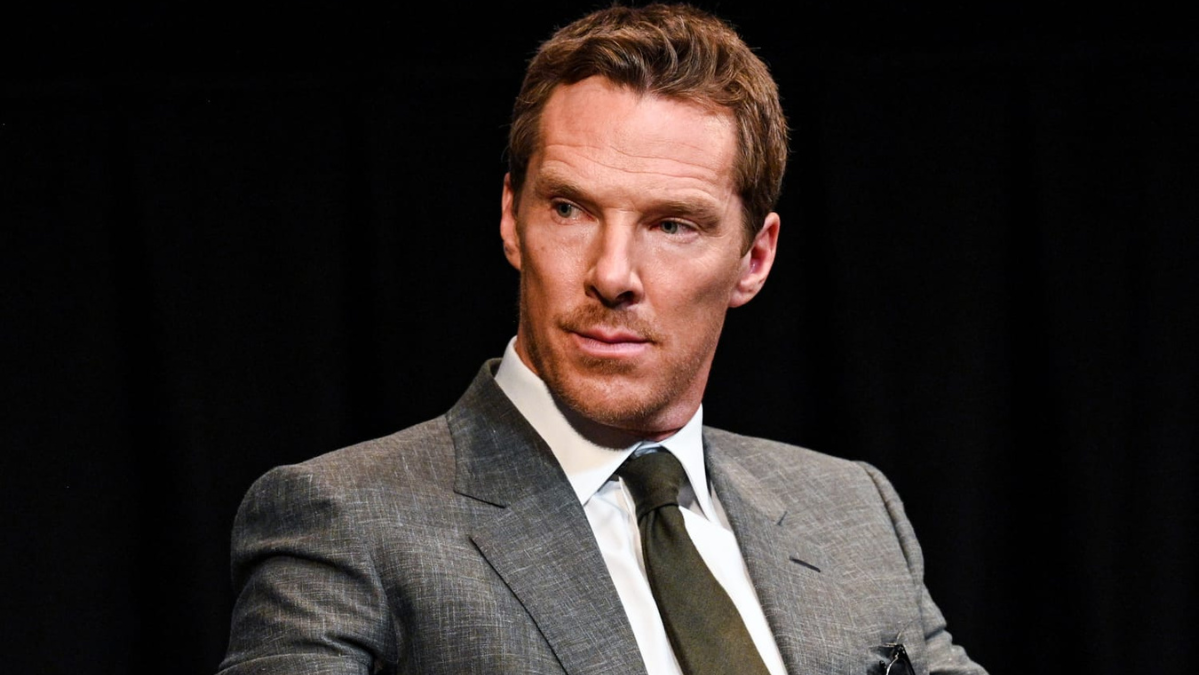
Why Benedict Cumberbatch Became Hollywood’s Go-To Genius
Following the Sherlock mania, Hollywood came calling with a specific type of role: the genius. It seemed for a period that if a script called for a character with a preternatural intellect, the casting directors’ shortlist began and ended with Benedict Cumberbatch. He portrayed Julian Assange in The Fifth Estate, the enigmatic WikiLeaks founder, capturing the character’s ideological rigidity and social awkwardness. He took on the role of the brilliant but tormented mathematician Alan Turing in The Imitation Game. In that film, Cumberbatch delivered a career-defining performance, portraying Turing’s genius not as a gift, but as a painful burden. He showed the world a man who could crack the Enigma code but couldn’t crack the social codes of his own society, culminating in a tragic final act that highlighted the historical injustice of Turing’s persecution. It was a performance that earned him his first Academy Award nomination and cemented his reputation as a serious dramatic heavyweight.
Yet, to label Cumberbatch solely as the actor who plays geniuses would be to ignore the sheer diversity of his filmography. What he does so effectively is use the perception of “intelligence” as a jumping-off point to explore deeper psychological fractures. Even when he stepped into the Marvel Cinematic Universe as Doctor Stephen Strange, he was playing a genius—a brilliant neurosurgeon brought low by arrogance. But Cumberbatch ensured that Strange was more than just a sorcerer with a PhD. He infused the character with a dry, sardonic wit that provided a counterpoint to the cosmic chaos around him. Over the course of several films, he has evolved Strange from a selfish elitist into a weary guardian of reality, showcasing a character arc that spans nearly a decade. In doing so, Benedict Cumberbatch proved that he could anchor a massive franchise without losing the nuanced, character-driven approach that defined his stage and independent film work.
Exploring the Versatility Beyond the Blockbuster
While it is easy to focus on the box office numbers and the pop culture catchphrases, the true measure of an actor of Cumberbatch’s caliber is found in the quieter, more unconventional choices hidden between the tentpoles. He has consistently sought out collaborations with visionary directors who demand more than just a star—they demand a collaborator. His work with director Steve McQueen in 12 Years a Slave, though brief as the sympathetic but morally complicit slave owner William Ford, demonstrated his ability to make a profound impact in limited screen time. Similarly, his role in Jane Campion’s The Power of the Dog was a revelation. As Phil Burbank, a cruel, repressed rancher in 1920s Montana, Cumberbatch shed any vestige of the “charming” star. He was almost unrecognizable, embodying a character so steeped in toxic masculinity and suppressed desire that it felt like a complete deconstruction of his previous image. That role earned him another Oscar nomination and solidified his reputation as an actor unafraid to be unlikable in pursuit of artistic truth.
This versatility extends to his voice work and his stage career. As the voice of Smaug in The Hobbit trilogy, Benedict Cumberbatch didn’t just read lines; he physically embodied the dragon, performing motion-capture on all fours to give the creature a reptilian, predatory realism. It was a testament to his commitment to the craft, a willingness to look absurd in a grey leotard for the sake of creating something authentic. On stage, he has tackled Shakespeare’s Hamlet and Frankenstein (alternating roles as Victor and the Creature with Jonny Lee Miller), proving that his stamina and range are rooted in classical theater. This constant shifting between mediums—from the intimacy of the London stage to the green screens of Hollywood—keeps his work fresh. He never settles into a rhythm of comfort, and that restlessness is precisely what makes watching his career so compelling. He is a star who constantly reminds his audience that he is, first and foremost, an actor.
The Man Behind the Icon: Personal Life and Public Persona
In an age of carefully curated social media personas and relentless paparazzi scrutiny, Benedict Cumberbatch has managed to maintain a remarkable balance between public visibility and private integrity. He is famously protective of his family life with his wife, theater director and writer Sophie Hunter. Unlike many celebrities who weaponize their personal lives for publicity, Cumberbatch treats his role as a husband and father with a solemnity that feels refreshingly old-fashioned. He rarely discusses his children in interviews, and when he does, it is with a warmth and humor that offers a glimpse of the man behind the intense characters. This deliberate separation between his public work and private life has only added to his mystique. It allows audiences to fully invest in his fictional creations without the noise of tabloid drama interfering.
Furthermore, Cumberbatch has used his platform to advocate for causes he believes in, aligning his public persona with a sense of social responsibility. He has been a vocal supporter of refugees, an advocate for the arts, and a patron for several charities. His involvement in the fight against the persecution of the LGBT+ community, particularly in light of his role as Alan Turing, feels deeply personal rather than performative. He engages in activism with the same intensity he brings to his roles—thoughtfully, articulately, and with a clear sense of purpose. In interviews, he is known for being witty, self-deprecating, and surprisingly goofy, often laughing at the absurdity of his own fame. This combination of intellectual gravitas and genuine humility makes him relatable despite his stratospheric success. He is a star who understands the responsibility of the spotlight but refuses to let it define or limit his humanity.
Conclusion
Looking back at the arc of his career, it is clear that Benedict Cumberbatch is not merely a product of the celebrity industrial complex; he is a true artist who has navigated that complex with exceptional skill. He arrived with a unique set of tools—a distinctive voice, an unconventional look, and a ferocious work ethic—and he used them to redefine what a leading man could be. In an era dominated by superhero franchises, he managed to bring Shakespearean weight to the Marvel Cinematic Universe. Amidst the clamor for instant fame, he took the time to cultivate a career built on the stage and in independent cinema, ensuring his longevity. He has shown that an actor can be both a bankable star and a risk-taker, that one can headline a global blockbuster one year and star in a challenging, auteur-driven drama the next.
Ultimately, the legacy of Benedict Cumberbatch will be one of transformation. He has a singular ability to disappear into a role, whether it is a dragon, a detective, or a rancher, while leaving an indelible mark on the audience’s consciousness. He challenges us to view intelligence as a dynamic, often painful, human trait rather than a sterile superpower. As he continues to take on new projects, directing for the first time and exploring new facets of production, one thing remains certain: he will never be boring. In a landscape where predictability often reigns, Benedict Cumberbatch remains a thrilling variable, an artist whose next move is always worth waiting for. He didn’t just climb the ladder of fame; he built a new one, rung by rung, with talent, tenacity, and an unwavering dedication to the craft of storytelling.
Frequently Asked Questions
What was the breakout role that made Benedict Cumberbatch famous?
While he had a steady career in British television and theater prior, the role that catapulted him to international stardom was his portrayal of Sherlock Holmes in the BBC series Sherlock, which premiered in 2010. His modern, high-energy interpretation of the iconic detective became a global phenomenon and opened the door to Hollywood leading roles.
Has Benedict Cumberbatch won an Academy Award?
Despite receiving widespread critical acclaim and two Academy Award nominations—one for Best Actor for his role as Alan Turing in The Imitation Game (2014) and another for Best Actor for his role as Phil Burbank in The Power of the Dog (2021)—he has yet to win an Oscar. He has, however, won a Primetime Emmy Award for his work as a producer on Sherlock and has received numerous other accolades, including BAFTA and Screen Actors Guild Award nominations.
Is Benedict Cumberbatch in the Marvel movies?
Yes, Benedict Cumberbatch plays the role of Doctor Stephen Strange in the Marvel Cinematic Universe (MCU). He first appeared in Doctor Strange (2016) and has since reprised the role in Thor: Ragnarok, Avengers: Infinity War, Avengers: Endgame, Spider-Man: No Way Home, and the sequel Doctor Strange in the Multiverse of Madness.
What is Benedict Cumberbatch’s connection to Alan Turing?
Cumberbatch portrayed the legendary mathematician and code-breaker Alan Turing in the 2014 historical drama The Imitation Game. His performance was critically acclaimed, and he became deeply involved in the campaign to pardon thousands of gay and bisexual men who were convicted under the same law that led to Turing’s prosecution, using his platform to advocate for historical justice and LGBT+ rights.
Does Benedict Cumberbatch have any formal training in acting?
Yes, he has a strong classical theater background. He earned a Master of Arts in Classical Acting from the London Academy of Music and Dramatic Art (LAMDA), one of the most prestigious drama schools in the world. Before his film career took off, he built a solid reputation on the stage, performing in numerous Shakespeare productions and with the Royal National Theatre.